Most bilingual sites in the Gulf are an English site with Arabic text poured into it. You can spot them in seconds: icons pointing the wrong way, English fonts trying to render Arabic, and a language switcher that dumps you on the homepage. Here is what the good ones do differently, with examples from sites we’ve built.
What “done right” means for a bilingual site
A visitor reading Arabic should feel the site was made for them first. The same goes for English. That takes design, development and SEO decisions, not just translation.
6 things good Arabic and English websites get right
1. The whole layout mirrors, not just the text
Navigation, columns, arrows, sliders, form fields and progress bars all flip for right-to-left. Things that shouldn’t flip, like logos, phone numbers and media controls, stay as they are.
2. Arabic typography is chosen, not inherited
English brand fonts usually have no Arabic glyphs, so browsers fall back to a system font. Good sites pair the English typeface with an Arabic one of similar weight and character, and adjust line height and sizes for Arabic script.
3. Each language has its own URLs
Use a structure like /ar/ for Arabic pages, with hreflang tags pointing each page to its translation. Google can then rank the Arabic page for Arabic searches and the English page for English ones.
4. The language switcher lands on the same page
Switching language on a service page should open that service page in the other language, not the homepage.
5. Arabic SEO is researched in Arabic
People search differently in each language, and often use dialect terms. Translating English keywords misses what Arabic speakers actually type. Each Arabic page needs its own titles, descriptions and keywords.
6. Forms, numbers and dates work in both directions
Phone fields, email fields and numbers stay left-to-right inside an Arabic form. Dates and currencies follow local formats.
Examples from our work
Alnowaiser, law firm, Riyadh
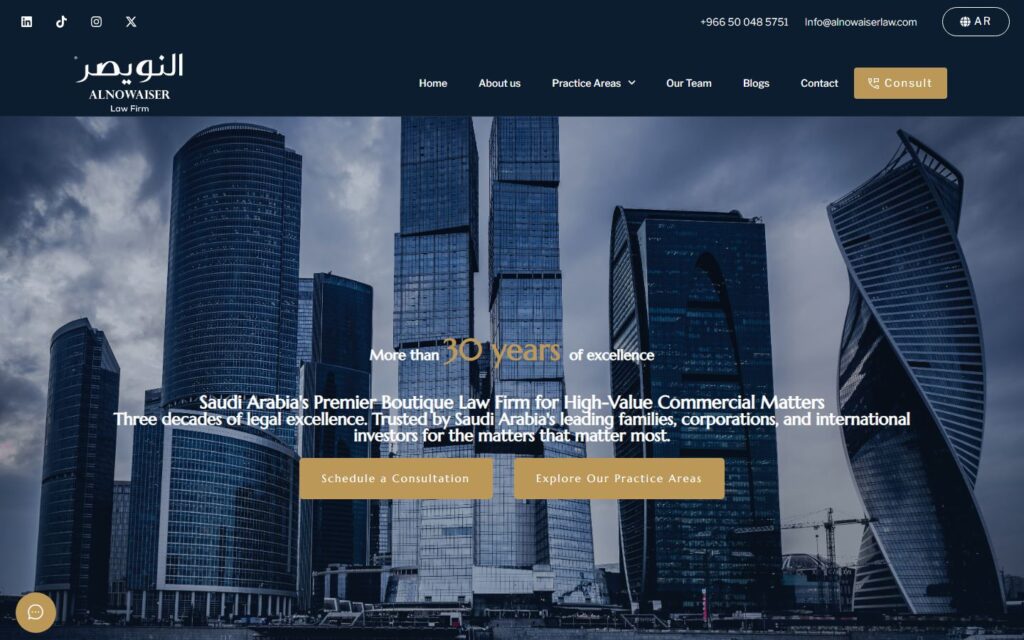
A commercial law firm website where both languages carry the same weight: mirrored layouts, matching typography and separate pages for each language, so the firm reads as established to Arabic and international clients alike.
Fuji Japan, elevators, London and Dubai

An elevator manufacturer with offices in London and Dubai, built in English and Arabic for both its European and Gulf audiences.
Shades of Buildings, design and build, Egypt
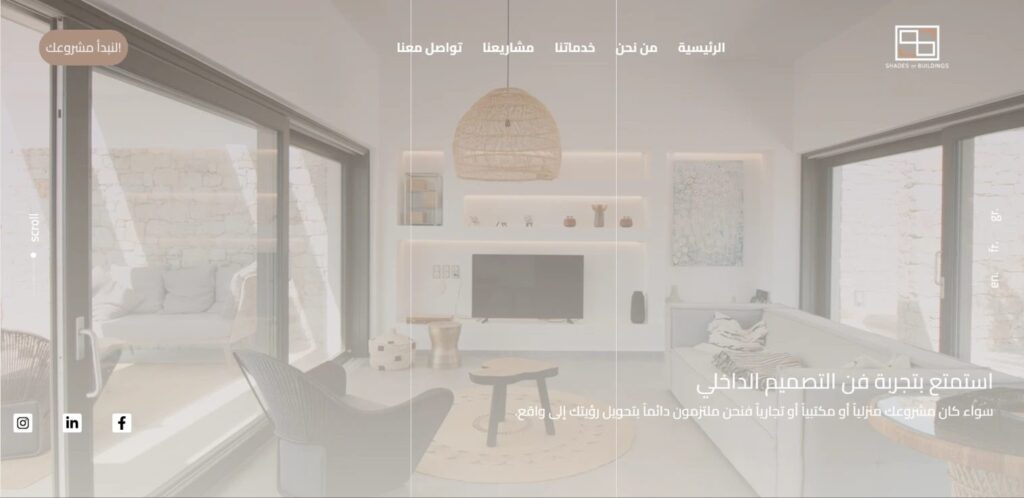
A design and build interiors company with three languages: Arabic, English and French. Proof that the same principles scale beyond two languages.
Dr. Shereen Fawaz, neuro-rehabilitation clinic, Egypt
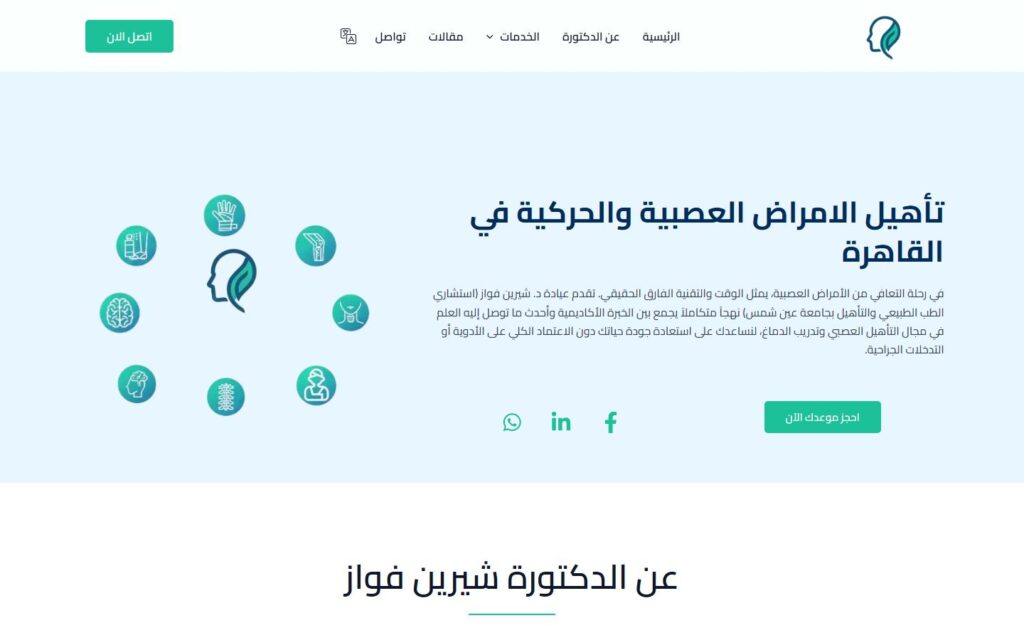
A clinic website in Arabic and English on WordPress, where patients and families can read about treatments in the language they’re most comfortable with.
True RTL layouts, Arabic typography and separate SEO for each language.
Common mistakes to avoid
- One URL for both languages. Google can only index one version.
- Machine translation. Fine for a draft, never for a business site.
- Icons and arrows not mirrored. Small, but it makes the Arabic site feel broken.
- English font for Arabic text. The browser picks a random fallback and the brand disappears.
- No Arabic metadata. Arabic pages with English titles won’t rank in Arabic search.
Planning a bilingual site
Decide early which language is primary, who writes or reviews the Arabic copy, and whether both languages launch together. A second language usually adds 30–50% to the build. Our website cost guide has full price ranges, or send a brief for a fixed quote.